
It is Durga Puja season, and we remembered our recent visit to an ancient shrine dedicated to Goddess Kichakeswari, an aggressive version of Durga. In fact, have noticed a pattern during our travels. There is always the right time for anything to happen, and not before that. This particularly applies to divine visits to Durga temples. We were following a Chhau trail starting from the Bengal border, through Jharkhand and finally ending in Odisha. En route, we visited the enigmatic Kichakeshwari Temple, the reigning deity of the Bhanja dynasty of Odisha.
Contents
Where is Kichakeshwari Temple located?
Kichakeshwari Temple in Khiching, the capital of the erstwhile rulers of this area belonging to the Bhanja Dynasty, is about 150 km from Rairangpur. Kichakeswari Temple is a protected monument under the Odisha State Archaeology Department. Given that Odisha had excelled in art and sculpture in ancient times, this 7th-century temple was a crowning glory to our trip to the Mayurbhanj region.
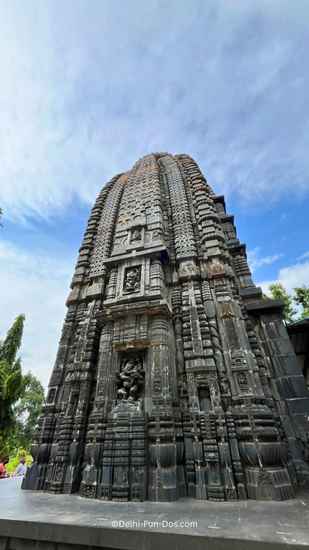
The Kichakeswari Temple was made of black chlorite stone. At first glance, we were struck by its simple yet impressive structure and the intricate carvings on its walls. The temple reflected the Kalinga style of architecture, with figures of deities, mythological scenes and glimpses of everyday life carved into stone. The details gave us a sense of the crafts that flourished in Khiching. We could also see why the temple remains an important place of worship, particularly during Durga Puja.
The idol of Goddess Kichakeswari, also carved in black chlorite, was covered with red drapes and garlands, leaving only her face visible. Her downward gaze reminded us of Durga as she slays the demon Mahishasura. It was indeed awe-inspiring as to how the sculptors had merged God-like piety with aggression in the Goddess’s expression.
Carvings on the Kichakerswari Temple
The beauty of the carvings on the walls of the temple can’t be missed. The Mahishashurmardini statue high up on one of the sides is one of the best pieces of divine art that we have come across. While we see such pieces at museums, it is always a different experience to stand before the sculpture in the place for which it was made, where we can study its scale, setting and details.
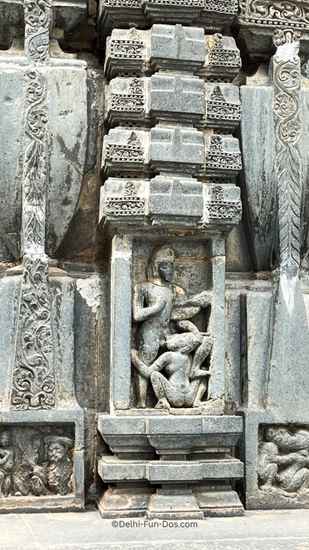
The bigger surprise was the abundance of erotic sculptures on the lower panels of the outer walls. Given the high skill of the sculptors, the details of the panels were clear even from a distance. We know about the highly acclaimed love statues of Khajuraho. It was good to see that such a liberal approach towards life and love was not restricted to central India but extended to the whole subcontinent.
Khiching is often described as an open-air museum of medieval Odisha sculpture. Scattered across the temple site were surviving stone carvings, sculptures and architectural fragments that offered a further sense of the remarkable artistic tradition that once flourished here.
Khiching Archaeological Museum
The Khiching Archaeological Museum, a separate building located in the Kichakeswari Temple complex, should also be visited to see specimens of sculptural brilliance up close. The museum was established in 1922 by Maharaja Pratap Chandra Bhanja Deo and is now part of the Odisha State Museum network.
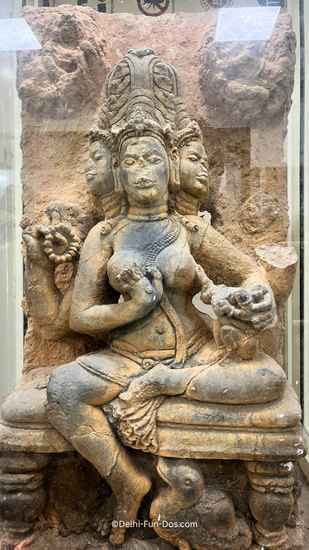
The museum housed stone sculptures, images of Hindu deities, architectural fragments and other remains recovered from Khiching and surrounding areas. Many of the items were intact, and we could see the displays in full glory. The idols and sculptures had unique physical as well as decorative features that provided context for the carvings we had just seen on the temple walls. The display here also carried Buddhist and Jain pieces that established the rich religious diversity of this region.
Kichakeswari Temple Timings
Someone had checked the timings before our visit and informed us that the temple was open till 1.30 in the afternoon. Accordingly, we arrived at about 12.30 pm with about an hour on hand. Unfortunately, the information was not accurate, and the temple was closed; we learnt it would open again after 3 pm. We felt deeply disappointed at the thought of missing a spectacular site we had been long looking forward to seeing.
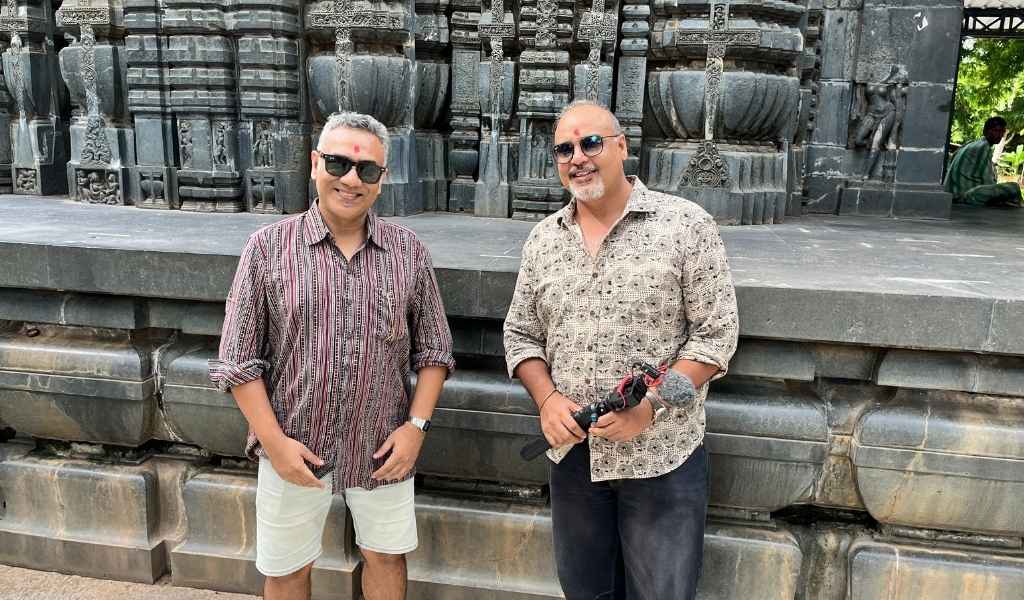
Good sense prevailed, and we decided to rearrange some of our plans and return after 3 pm. Thank God, literally so, because the visit turned out to be one of the most aesthetically fulfilling experiences of our trip. Missing the temple would have left a gap in our Mayurbhanj journey. The experience also reaffirmed our belief that the Goddess grants us darshan at the right moment, and, we repeat, some visits happen when they are meant to happen. The general visiting hours are 5 am to 12 noon and 3 pm to 9 pm. The timings may change on special days or festivals, so do ask around locally before planning your visit.
How to Reach Kichakeswari Temple
Kichakeswari Temple stands in Khiching, in Odisha’s Mayurbhanj district, around 150 km from Baripada, the Mayurbhanj district headquarters. The temple can be reached by road from Baripada, Rairangpur or Keonjhar. As public transport to Khiching may be limited, it is advisable to arrange a car or local transport in advance, allowing enough time to visit both the temple and the nearby archaeological museum.
By road: You can travel from Baripada, Rairangpur or Keonjhar by car or taxi. If you are exploring Mayurbhanj, Khiching can be included in a longer road trip.
By train: Railway options include stations in the wider Mayurbhanj and Keonjhar region. Check the train connections and onward road transport before choosing your railhead, as published sources differ on which station is most convenient.
By air: Bhubaneswar is one option for air travel, followed by a long road journey to Khiching.
Allow time for both the temple and the Khiching archaeological museum, which is located within the temple complex. Check local timings before setting out, as published timings vary.
Is a visit to Khiching worth it?
Our visit to Kichakeswari Temple brought together the different threads of our Mayurbhanj journey, from Chhau and grass weaving to the history of the Bhanja rulers. We have travelled in Odisha and seen the popular temples of Puri and Bhubaneswar. We saw a steady footfall of devotees here, which also included saffron-clad Buddhist monks. The temple gave us a way to understand how diverse faiths, royal patronage and sculpture came together in this part of Odisha. We left Khiching thinking about the people who shaped these figures in stone and the generations who have continued to come here to worship Maa Kichakeswari. For anyone travelling through Mayurbhanj, Khiching is worth setting aside time for, especially if the journey includes an interest in history, living traditions and temple art.
0 Comments