
If you’ve ever wondered what Poila Boishakh really is, think of it as the Bengali New Year – but with a lot more emotion, culture, and food attached to it. Poila Boishakh (also written as Pohela Boishakh) marks the first day of the Bengali calendar, and this year it was celebrated as Poila Boishakh 1433. The calendar dates back to the Mughal era, when it was introduced to align tax collection with the harvest cycle. Over time, it evolved into a festival that celebrates new beginnings, prosperity, togetherness, and community.
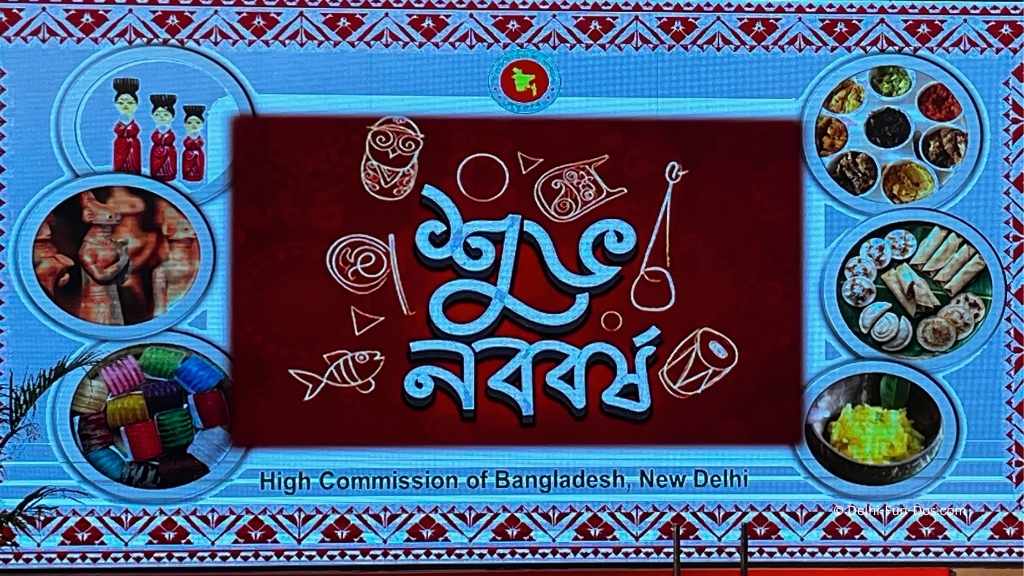
What makes this time even more special is that New Year celebrations happen across different parts of India and the subcontinent around the same period. While Bengal and Bangladesh celebrate Poila Boishakh, Punjab celebrates Baisakhi, Assam celebrates Bihu, and Kerala celebrates Vishu. Different names, different traditions, but the same spirit of joy, fresh beginnings, music, dance, and of course, food. And this is exactly what we experienced at the Bangladesh High Commission in Delhi, where Poila Boishakh 1433 was celebrated with warmth, colour, culture, and a massive spread of food.
Contents
Poila Boishakh Celebration at Bangladesh High Commission Delhi
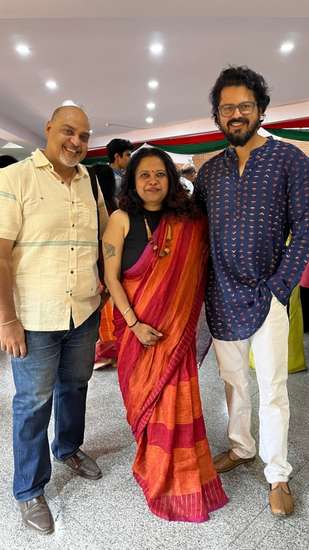
Walking into the Bangladesh High Commission, the first thing we noticed was the warmth. People greeting each other with cheerful “Shubho Noboborsho”, smiles everywhere, and a festive atmosphere that instantly made you feel part of the celebration.G uests had arrived dressed in their traditional best – elegant sarees, colourful kurtas, traditional jewellery, and lots of red and white, which are closely associated with Bengali New Year celebrations. Everywhere you looked, there was colour, culture, and excitement in the air. But honestly, before anything else, our eyes went straight to the food counters.
Snacks and Street Food at Poila Boishakh
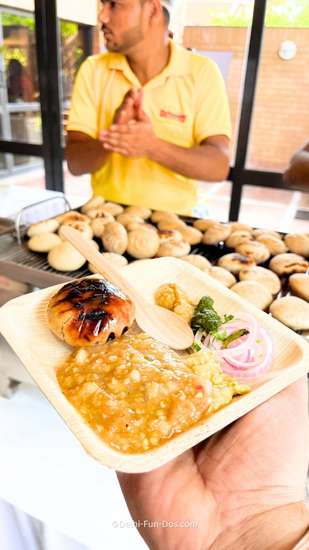
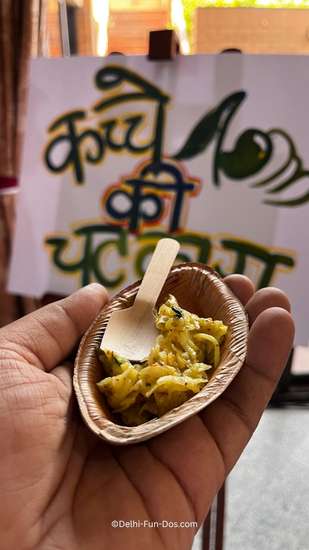
The celebrations started with snacks and welcome drinks, and even that felt like a proper mini feast. There was jhalmuri, full of crunch and mustard oil flavour, refreshing sharbats, smoky litti chokha from Bihar, and something that instantly stood out – kacche aam ka chatkara, made with raw mango and kasundi, the sharp Bengali mustard sauce that gives everything an extra kick. At that point we thought, okay, this is already impressive. Little did we know that this was just the beginning.
Cultural Performances at Bangladesh High Commission Delhi
Before the main course, everyone gathered inside for the cultural performances, and this part beautifully reflected the spirit of the event. There was live singing, soulful music, and of course Rabindra Sangeet, without which a Poila Boishakh celebration almost feels incomplete. The songs brought in that nostalgic Bengali warmth that instantly changes the mood of the room.
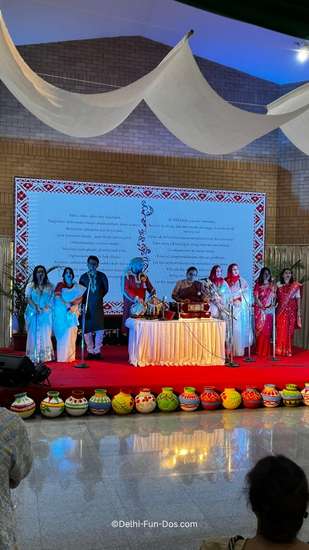
What made the performances even more special was how inclusive they felt. It wasn’t restricted to only Bangladesh or Bengal. There were dances and performances representing different parts of India and the subcontinent. Some foreign dancers even performed Odissi dance, which was a lovely surprise and received huge applause from the audience.
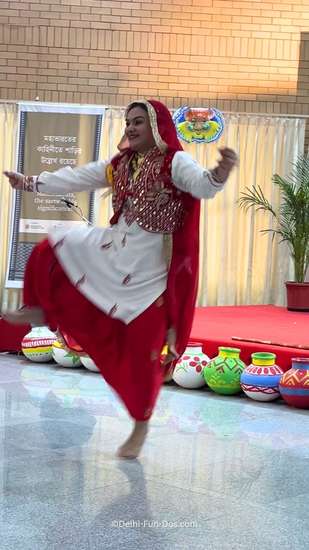
And then came the high-energy Bhangra performance from Punjab, which completely changed the vibe inside the hall. Suddenly everyone was clapping along and enjoying the energy. At that moment, it truly felt like this celebration was not just about one New Year, but many New Year traditions coming together under one roof.
Also read: Poila Boishakh-Celebrating Bengali New Year Nababorsho
Traditional Bangladeshi Food in Delhi
Then came the main course, and honestly, this is where things got serious. The spread was primarily Bangladeshi, and it felt like we had unknowingly signed up for a full crash course in Bangladeshi cuisine. From different varieties of bhortas to comforting dals and rice dishes, there was so much to try that we genuinely lost count. One of the biggest surprises for us was jeera bhorta. It sounded simple, but the flavour was incredible.
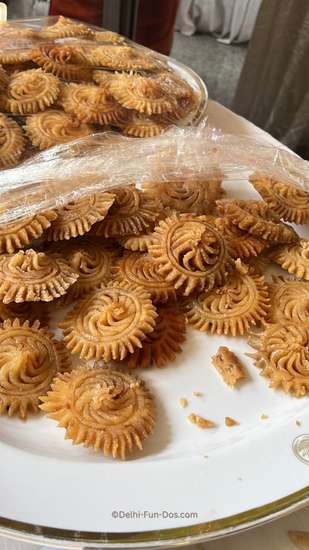
There was aam dal, slightly tangy and comforting, served alongside fragrant ghee bhat, and together they made for the kind of meal you don’t want to rush through. What stood out most was the variety of bhortas. Some were spicy, some smoky, some mustard-heavy, and each one tasted completely different from the other.
Along with the Bangladeshi dishes, there were flavours from neighbouring regions too. We spotted litti chokha and thekua from Bihar, and from Bengal there was mutton ghugni and soft, delicious sondesh. At one point, we looked at each other and said – this has officially turned into a foodgasm we were absolutely not prepared for.
Bangladeshi Desserts and Pithe Varieties
Just when we thought we were done eating, we stepped outside the main hall and discovered another section waiting for us. On one side was a live kitchen serving freshly fried fish fry, hot and crispy straight out of the pan. Naturally, people had already formed a queue there. And on the other side – dessert heaven. There was malpua, creamy payesh, a huge variety of pithe (pitha), and several sweets and snacks we had honestly never heard of before. And that’s what made the experience even more exciting.
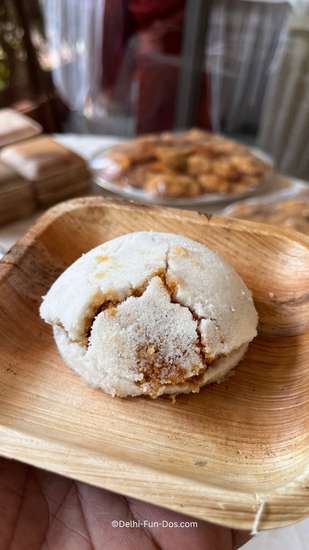
Some flavours felt familiar because of their connection with Bengali cuisine, but many dishes felt unique to Bangladesh. The textures, fillings, flavours, and cooking styles had their own identity. Also, we genuinely had no idea there were so many varieties of pithas in existence. Not only were these desserts beautiful to look at, but almost everything we tried was delicious.
India Bangladesh Cultural Connection Through Food
What made this afternoon memorable wasn’t just the food. It was the larger idea behind the celebration. This wasn’t simply a Bengali New Year event. It felt like a celebration of shared culture, shared traditions, and the beautiful cultural connection between India and Bangladesh.
The food crossed borders. The music crossed borders. Even the performances reflected how connected the traditions of the subcontinent still are. From Poila Boishakh in Bangladesh and Bengal to Baisakhi in Punjab and Bihu in Assam, the spirit of celebrating new beginnings was present everywhere.
Also Read: International Mother Language Day at Bangladesh High Commission
As the event slowly came towards the finale, all the performers gathered together on stage, and naturally the audience joined in too. Because honestly, what is a New Year celebration without some dance? Food done. Snacks done. Drinks done. Now it was time to dance. People started matching steps with the performers, laughing, recording videos, cheering for each other, and simply enjoying the moment. And somewhere between all of this, we also bumped into friends, clicked lots of pictures, and soaked in the festive atmosphere one last time before leaving.
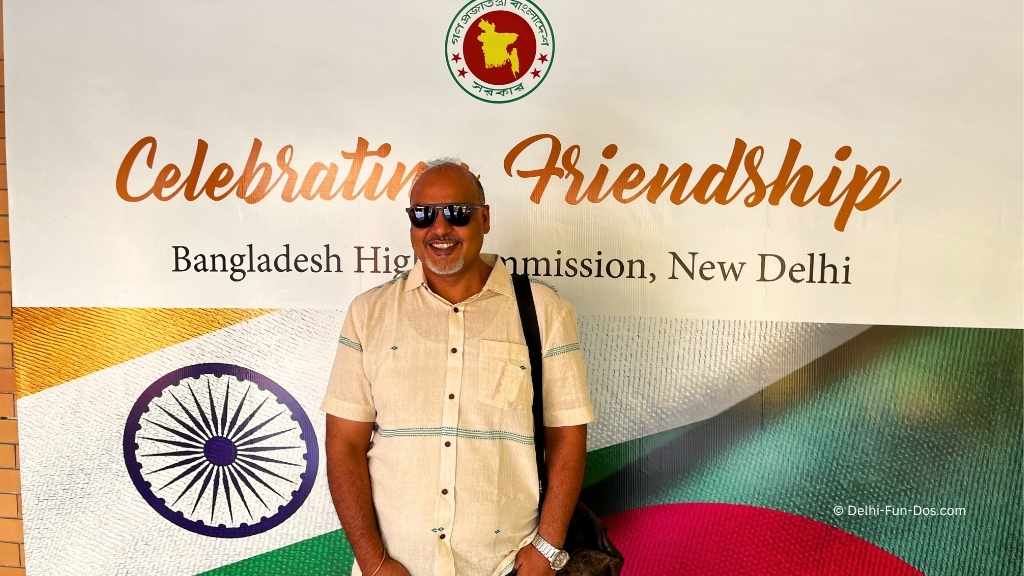
The Poila Boishakh celebration at Bangladesh High Commission Delhi turned out to be much more than a cultural event. It was an afternoon filled with flavours, music, colour, warmth, conversations, traditions, and a reminder of how beautifully connected cultures across the subcontinent still are. From jhalmuri to fish fry, from bhortas to pithe, from Rabindra Sangeet to Bhangra, this felt less like attending an event and more like travelling through cultures in one single afternoon. And honestly, we loved every bit of it.
Shubho Noboborsho ✨
0 Comments