
Purulia has evolved over time and is one of the most sought-after short trips from Kolkata and other places in West Bengal. These hills are however still serene and are blessed with verdant nature and pulsating folk culture. We finally made it to Purulia, a little sceptical that the hype may be false and we might be disappointed. Glad to have been proven wrong, Purulia proved to be one of the best slow travel spots in India. We were staying at Mayur Pahar near Ayodhya Pahar and there were many to-dos of Purulia that we were recommended. While we ticked off some of them, a must visit was Pakhi Pahar or the Bird-Hill, a most off-beat location in West Bengal.
Contents
Pakhi Pahar – the bird hill of Purulia
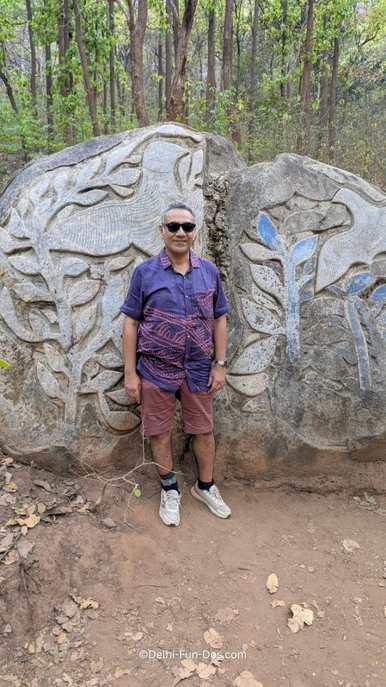
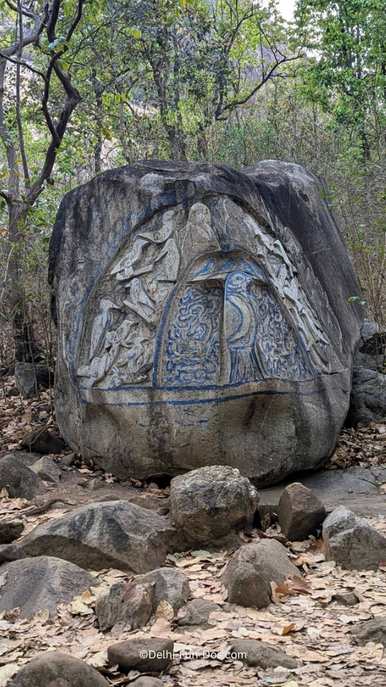
At Baghmundi near Ayodhya Pahar, there is this granite hill that is covered with trees and is a hotspot of migratory birds every year. Local artist Chitta Dey might have been inspired by the migration, still one of the miracles that the world is yet to decode, and carved birds, bees and other animals on many of the mountain bodies and boulders here, thus the name Pakhi Pahar, Pakhi meaning birds in Bangla. Some of these carvings were later accentuated by paint and given a psychedelic effect.
We had hired a cab that got us to the base of Pakhi Pahar. The local village women worked as guides and it seemed that hiring their services was the protocol. They said that this system had been put in place to generate local employment from the footfall here. Truth be told, it is not extremely essential to be guided here since most of the works, all out in plain sight, are self-explanatory and open to interpretation. That said, a guide knew the spots in the forest that otherwise one might have to explore out and that saved time. Moreover, it was our two-bit worth to a novel initiative of women empowerment in Purulia.
Pakhi Pahar was on its own very picturesque. It was not very high so the hill did not look daunting, and had a somewhat friendly appeal. The trees were moderately dense and created a soothing cover to Pakhi Pahar. The whole scenery was very calming to our city-worn eyes. We walked through the trees on the leafy forest floor glad that we were wearing walking shoes. For a while there was nothing and then suddenly a piece of sculpture peeked amongst the trees and we saw the first bird sculpture.
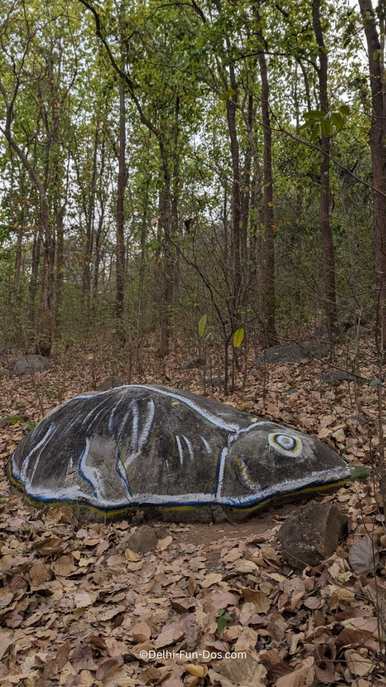
Before reaching we would have imagined something, but this piece was still very unexpected by way of size, depth and presence. The bird carvings, some single, some in flocks and some in flight, dominated the artwork. These were all abstract representation of course and it was no accurate depiction of any single species. Yet the birds seemed so real, like the artist had breathed life into his works, we could almost feel them flutter around us. The poetic freedom that the artist adopted was nuanced. We felt joy yet pensive at the same time. Most of the carvings were at ground level while few pieces involved some climb.
Although birds dominated the works, there were many other animals that had also found pride of place in the grand spectacle in the mountain. While writing this piece, we revisit the goosebumps that we felt seeing the hare, deer, tiger and the tortoise all co-habiting in Dey’s world. The open canvas was a world of peace where birds, herbivores, carnivores and amphibians co-existed side by side. We spent about 2 hours here and could have stayed longer just soaking in the vibes. It was like Bhimbetka all over again and we could see the inherent urge to decorate rocks and bring some softness in the otherwise harsh surroundings.
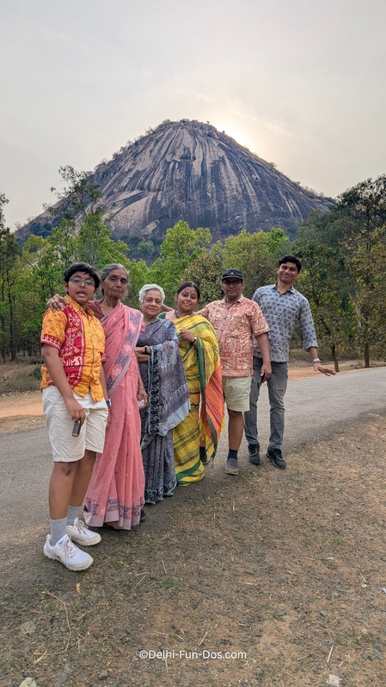
A quick round of delicious lemon tea, of lebu – cha a hot favourite in Bengal, at the tea-stall located at the entrance was another reckoning. The women run shop, as well as the all-women guide group was one more lesson in women’s empowerment far away from city and media lime light. The sun was setting behind us and our vehicle was among the last few at the very clear parking lot. Lost in our thoughts, we hopped into our car for the drive back to our homestay.
Nearby attractions to Pakhi Pahar
You can also cover other tourist attractions of Purulia during the same trip.
Chorida Chhau Village
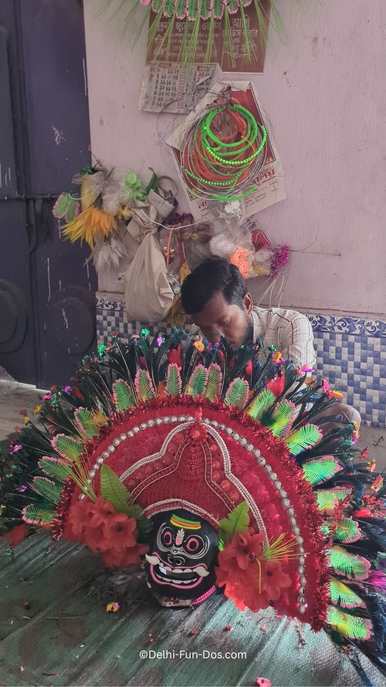
The internationally acclaimed Chhau Dance has a few schools or Gharanas. Purulia Chhau, perhaps the most popular version is practised at Chorida Village. We reached the town square that was lined with shops selling colourful Chhau masks. Some masks were fitted with feathers, decorations and strings and were meant to be worn during actual performances while some others were for decorative purposes. But there were some earth coloured ones that were still drying before being painted and those stole our hearts. We saw many posters and one mask-maker did a little jig for us too.
Turga Waterfalls
Turga is a very clear cascading waterfall near Baghmudi in Ayodhya Pahar, Purulia. We trekked downwards to reach the base and saw the heavy fall forming a water basin where people had entered and were bathing. The delightful view was worth the hike but if you have issues with even mild treks, then you may pass.
Marble Lak
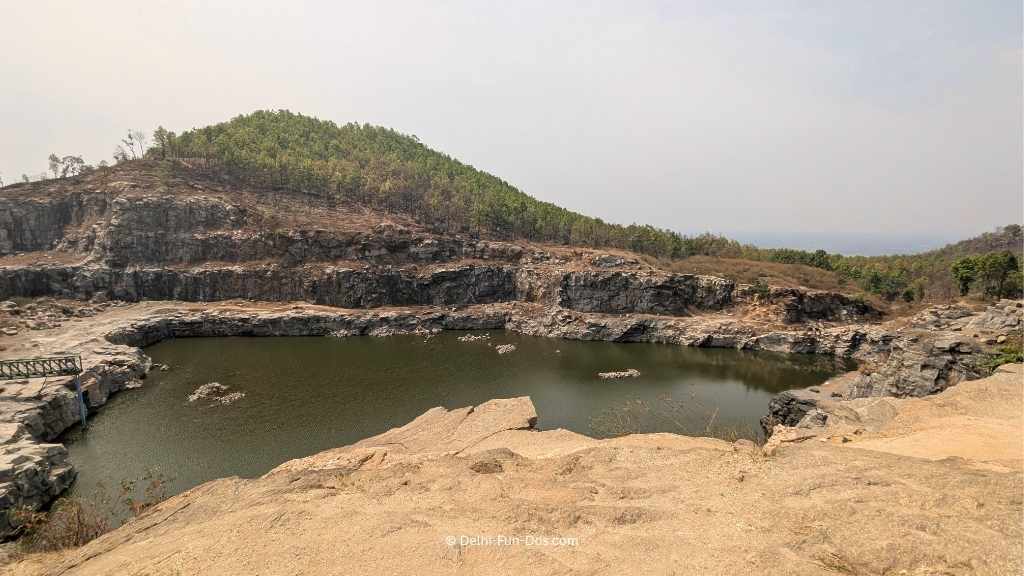
But do not pass this one – the Marble Lake. It is an open-pit for marble excavation and the basin is filled with water. The deep clear water with the small hills at the background makes it look like a Hollywood adventure movie set and is indeed a surreal location.
How to reach Pakhi Pahar
Purulia is well connected by road and rail from Kolkata and other parts of West Bengal. The nearest major railway station is Purulia Junction, from where one can hire a car to reach Ayodhya Hills and Baghmundi. The drive from Purulia town to Pakhi Pahar takes around one and a half to two hours depending on road conditions. Private cars and hired vehicles are the most convenient options since local transport is limited in the hill region. The nearest airport is Netaji Subhas Chandra Bose International Airport in Kolkata.
Where to stay at Pakhi Pahar
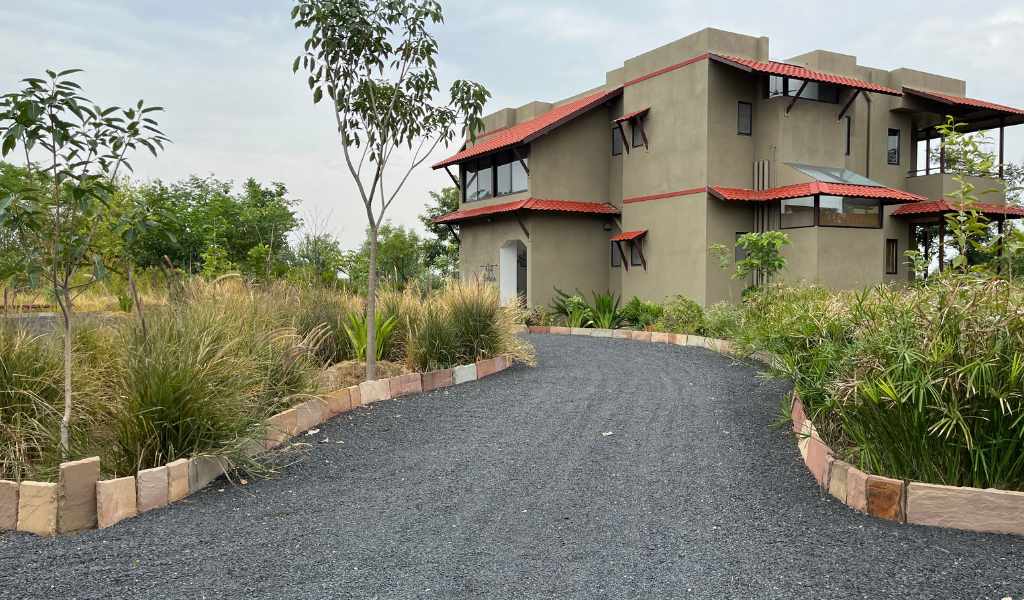
There are many stay options here but the homestays are the preferred choice. The homestays cater to various price and comfort categories in Purulia Town, on Ayodhya Hills or other hills nearby. Purulia is a big area and it might be tough to cover all parts from the same location. For easy access to Pakhi Pahar, Marble Lake, Chorida Village and so on, you may prefer staying near Ayodhya Pahar or Baghmundi.
We went in the month of March but the weather was so pleasant that we did not require the air-conditioning. The food here is basic but wholesome and truth be told, do not expect fancy fare. Some properties also arrange station pickup and drop, local sightseeing, village walks and traditional meals on request. They also organise Chhau performances on substantial prior request.
Best season to visit Pakhi Pahar
Purulia is part of the Chhota Nagpur Plateau and hence summers are hot and avoidable. Monsoons are pleasant but it might be inconvenient to navigate the hill roads. Hence winter to spring, October to March are the ideal months for visiting Pakhi Pahar, a completely outdoor experience. Also, by way of reminder do wear comfortable walking shoes and carry sufficient drinking water. This area is dry and one is prone to thirst more often when one is outdoors.
What to buy in Pakhi Pahar, Purulia
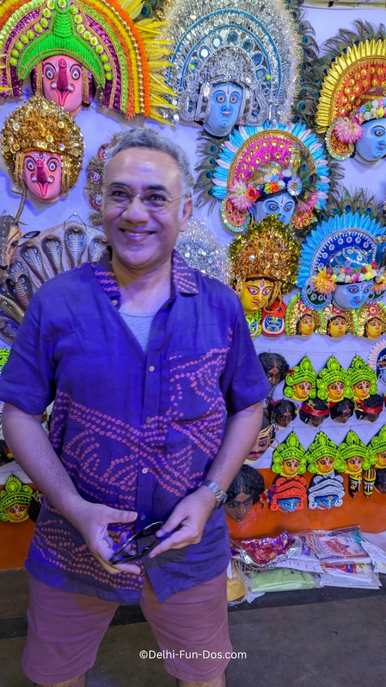
Purulia is known for its vibrant handicrafts and folk-art inspired souvenirs. Chhau masks from Chorida Village are the most popular keepsakes and are available in many sizes ranging from decorative miniatures to elaborate performance masks. Visitors can also shop for dokra craft items, bamboo products and locally made artefacts inspired by folk culture. The guides at Pakhi Pahar also offered small packets of local spices, pickles and handmade snacks and medicated oils for arthritic ailments.
Pakhi Pahar – An Unmatched Spectacle
While big on collecting souvenirs, we somehow did not buy anything during this visit. In retrospect, this could be because of the fullness of the experience. The spectacle of Pakhi Pahar, a surprise that is difficult to fit in any category, was enough memories for long. Hiding in the remote Purulia forest, the alfresco art gallery in an already enchanting setting filled us with awe. This was unparalleled to any such site we have visited as travel-writers. We had some notion yet what we saw was mind-boggling in terms of the concept and visualisation, execution and the final splendour. Kudos to Mother Nature for creating such a scenic location and then to the artist and his team for embellishing with so much splendour, depth and care.
It's great that the women were innovative and found ways to make their services indispensable. I took a close look at the rock etchings and the details were impressive. Truly beautiful trip.