
Some places receive a lot of attention in travel guides and history books. Some quietly hold very early chapters of human history and remain far less discussed. The Bhimbetka Rock Shelters belong to that second category. Even though the site is recognised as a UNESCO World Heritage Site, it is still almost unknown compared to many other historic destinations in India. Bhimbetka is not just a hidden gem of Madhya Pradesh, it is a hidden gem of India.
We, fortunately, had read about Bhimbetka and this spot had been on our travel list for quite some time. Since the site lies close to Bhopal, we visited Bhopal and planned a day trip from there. The distance is around 45 kilometres, and we booked a taxi for the day. The drive took about an hour. Most of the road is smooth, with a slightly dusty stretch towards the end that slowly leads into the forested landscape around the shelters.
Once we started walking through the rock shelters, the experience felt very different from a typical sightseeing stop. We were looking at places where people had lived and painted thousands of years ago. That awareness made the visit feel meaningful. We ended up spending more than three hours there and could easily have spent longer.
Contents
Our First Impression of Bhimbetka Rock Shelters
Our first impression of Bhimbetka was pure awe. We had seen photographs of the Bhimbetka cave paintings earlier, yet standing in front of the actual rock shelters felt very different. Walking through the rocks brought a strong feeling that we had stepped into a very old world. It felt like moving through layers of time while looking at places where people lived and painted thousands of years ago.
As we entered the site, a guide who was leading another group asked if we would like to join the tour. Since we could access only basic information about the place in public domain, we accepted the offer. Looking back, that decision helped us understand the site much better.
Brief History of Bhimbetka
Before exploring the shelters, we became curious about the name itself. Bhimbetka is widely believed to mean “Bhima’s resting place” or “Bhima’s seat.” The word combines Bhima, the second of the five Pandava brothers mentioned in the Mahabharata, and “Baithak,” which means a seat or resting place.
According to local belief, Bhima rested in these hills during his exile and interacted with people who lived in the region. The dramatic rock formations and natural shelters easily lend themselves to such stories.
From an archaeological point of view, the site gained global attention in 1957 when Indian archaeologist Vishnu Shridhar Wakankar identified the formations as prehistoric rock shelters. His discovery opened up an entirely new understanding of early human life in the Indian subcontinent.
Prehistoric Cave Art in India
One of the most remarkable aspects of Bhimbetka is the long time span represented by the paintings. The earliest paintings are generally dated to around 10,000 BCE during the Mesolithic period, although human presence in the area goes back even further. Painting activity continued through several prehistoric phases and even into early historic periods, around the 2nd century BCE and later. That means the rock surfaces were used by many generations over thousands of years.
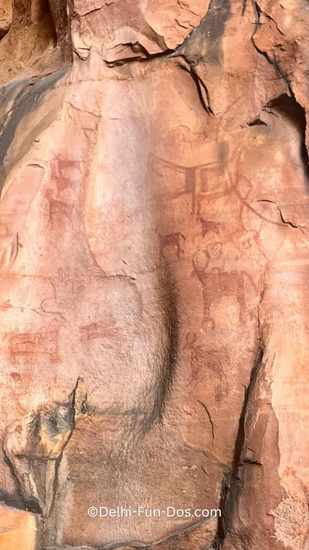
When we looked closely, we could actually notice overlapping layers of drawings. Older animal figures sometimes appeared beneath later scenes showing people, groups or domestic animals. It felt like the same rock walls had slowly become a visual record of life across centuries.
Evidence of Early Human Life at Bhimbetka
Bhimbetka is famous for its paintings, yet the archaeological evidence of habitation is equally interesting. Excavations have revealed some of the oldest known stone habitation floors and structural remains in the region. Archaeologists discovered flattened living surfaces, stone alignments and tools belonging to different prehistoric periods. These findings suggest that the shelters supported regular habitation rather than temporary visits.
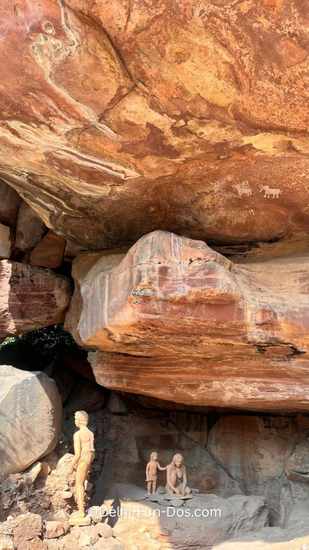
Near the entrance area, small models of early inhabitants help visitors visualise how people may have lived here. The models show families sitting near fires, preparing food and shaping tools. There is also evidence of burial activity in the wider complex, which suggests organised community life and ritual practices.
How the Bhimbetka Rock Shelters Were Formed
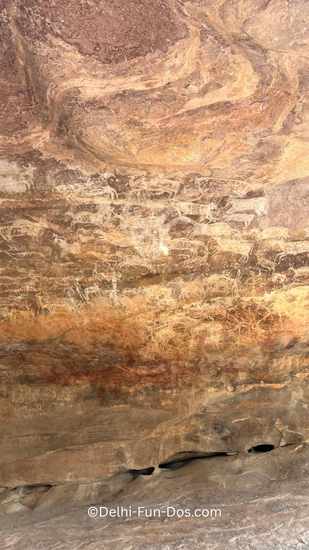
The shelters at Bhimbetka are natural rock formations rather than caves carved by people. They developed in very old quartzite sandstone. Over millions of years, wind, rain and natural weathering slowly shaped the rocks. The nearby Betwa River system also contributed to the erosion that helped form these structures.
As softer layers wore away, harder rock remained and created ledges and overhangs. Some large boulders appear balanced on top of each other, creating dramatic shapes that form natural shelters. Early human communities simply used these ready-made formations for protection and living space.
What We Saw Inside the Bhimbetka Rock Shelters
The Bhimbetka complex includes more than 700 rock shelters. Only 14 caves are open to visitors today. This limited access helps protect the paintings and keeps the site peaceful. Within those shelters, we saw many animals painted using natural mineral colours such as red ochre, known locally as geru and lime or chuna. All the paintings were procured from the soil in this area. The animals that frequently occur in the paintings include deer, bison, gaur, wild boar, elephants and even rhinoceros.
Some paintings show hunting scenes with bows, arrows, spears and axes. Other images depict groups of people dancing or gathering together. In some later layers we noticed figures riding horses and elephants. These scenes indicate a transition from hunting and gathering communities to societies where animals had begun to be domesticated.
Also read: Delhi to Gwalior by car – Weekend trip with a twist
Must See in Bhimbetka Rock Shelter
Our first look at the rocks and paintings was during the guided tour. After that tour ended, we explored the site again on our own and revisited several shelters. Later we sat quietly on one of the benches and reflected on the spectacle that had just unfolded before us. Below are the spots that stood out for us.
- Palm Outline – If we had to pick one highlight, it would be the simple palm outline made in geru. Unlike the detailed hunting scenes or animal groups, this is just a hand pressed onto stone. That direct human impression felt very different from all the other paintings.
- Zoo Rock – This is probably the most detailed panel in the complex. It reportedly features around 252 animals across 16 species. We could clearly identify deer, bison, elephants and wild boar across the surface. It almost feels like a record of the wildlife that once lived around these shelters.
- Boar Rock – This panel shows a giant wild boar that appears to be chasing a much smaller human figure. The difference in size suggests the danger early humans faced while hunting.
- Auditorium Cave – This cave has a higher ceiling and an open structure that almost feels like a natural hall. It also contains ancient cup-like depressions known as cupules, believed to be among the oldest human-made marks anywhere.
- Turtle Rock – This is not a painting but a natural rock formation where the rocks resemble the shape of a turtle. It is a striking resemblance like a piece of sculpture and worth seeing.
- Models – Do not miss the first caves where ancient cave life has been recreated through models. They help put the entire visit into perspective.
Why Were the Bhimbetka Paintings Created?
When we asked our guide why the paintings were created, he casually said that the dwellers probably did it as a “time-pass” or hobby. We were not entirely convinced by that explanation. The paintings were created probably for several reasons. In many parts of India, floor and wall art such as Alpona in Bengal began as aspirational art. People would draw the objects they wished for during worship, such as crops, ornaments, houses or cattle, hoping to be blessed with them.
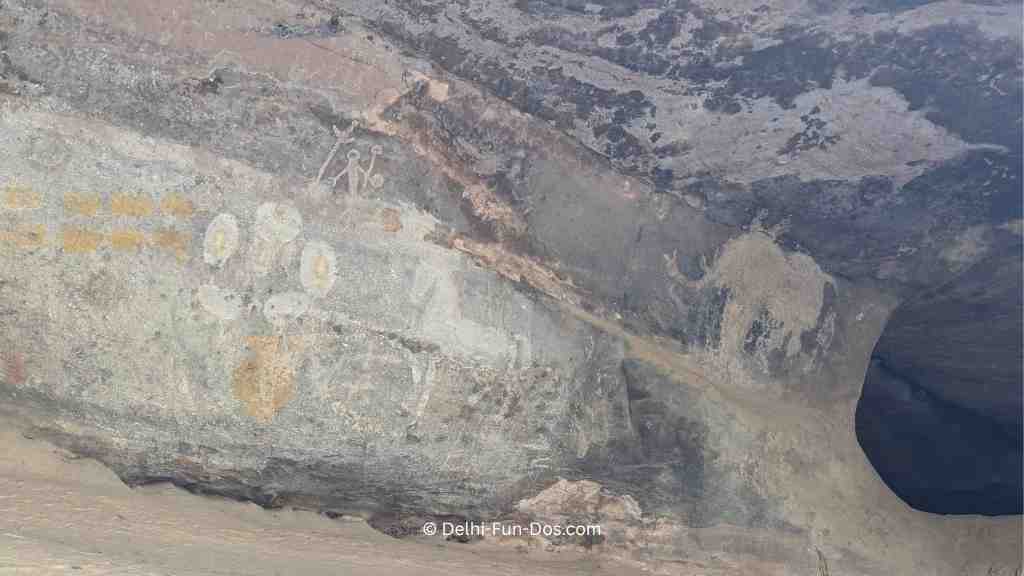
Or, perhaps the animals at Bhimbetka were painted as prayers for successful hunts or as expressions of gratitude for good hunts. Some paintings may have recorded everyday life such as hunting, gathering food, dancing or community gatherings. Others may have had ritual or spiritual meanings. They could even have been a way of recording the achievements of a community, much like war paintings. These are all conjectures and we will never know for sure. Our best guess is that the rock walls served as a shared visual record of life, beliefs and experiences.
Influence of Bhimbetka on Later Folk Art Traditions
While looking at the paintings, we noticed that some figures felt very familiar. The stick-like human forms, dancing groups and geometrically shaped animals reminded us of several Indian folk art traditions that still exist today. Art forms such as Warli painting from Maharashtra and Pithora painting practised by tribal communities in parts of Gujarat and Madhya Pradesh use similar simple figures and scenes from everyday life. Seeing this similarity makes you realise how long the tradition of visual storytelling has existed in India.
Also read: Why You Must Visit Khajuraho At Least Once In Your Lifetime
Bhimbetka Ticket Price and Timing
We imagined that the ticket prices for such a high maintenance zone would be expensive. However, Bhimbetka ticket price remains very reasonable. It is Rs 150 for each vehicle with up to 6 visitors (excluding the driver). The ticket counter was not at the entry gate but about 1.5 to 2 km before that.
The site usually opens about 7:00 AM and closes about 6:00 PM.
Best Time to Visit Bhimbetka
The best time to visit Bhimbetka is between October and March when the weather remains comfortable for walking among the shelters. We visited in January and found the conditions ideal for spending several hours exploring the zone. It is all in the open and the sun would be uncomfortable so summers are very difficult here. Also, given that the area is rocky and inside a forest, access in monsoon is also difficult and this season is avoidable too.
PIN FOR LATER READ
How to Reach Bhimbetka?
Bhimbetka is located near Bhopal, the capital of the Indian state of Madhya Pradesh. We based ourselves in Bhopal, a hub for culture travel in India. There are many ways to reach Bhopal.
- By air: Raja Bhoj Airport in Bhopal connects major cities.
- By rail: Bhopal Junction and Rani Kamalapati stations, both in Bhopal, are well connected.
- By road: There are overnight buses that connect Bhopal with many other Indian cities.
Using Bhopal as a base made the visit very easy. From Bhopal, we hired a rental vehicle from Uber and the drive to Bhimbetka took about an hour. On the way back it took longer because we also visited Bhoj Temple which is a slight detour.
Other attractions near Bhimbetka
Bhoj Temple
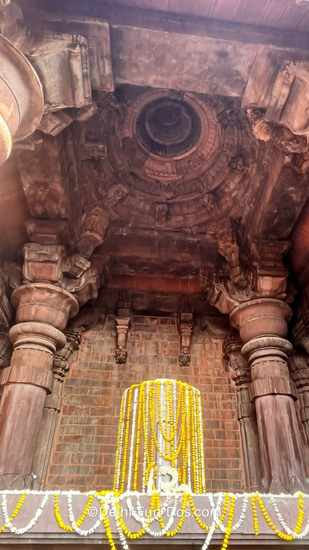
The 11th century unfinished, yet monumental Bhojeshwar Temple houses one of the largest Shiva lingas in India. The temple has spartan carvings, but very exquisite. The impressive size of the Shiva Lingam, with carvings at the base, is definitely a vibe.
Sanchi
The serene Sanchi Stupa, with its intricately carved toranas, stands as a beacon of early Buddhist architecture and another UNESCO-recognised site near Bhopal.
Vidisha
Close to Sanchi lies Vidisha, home to the Heliodorus Pillar and the Udayagiri Caves, where Gupta-era sculptures mark another leap in Indian art history.
Together, these create a compelling circuit for lovers of history travel in India.
Pro Tips for Visiting the Bhimbetka Rock Shelters
A few small things made our visit smoother and more enjoyable.
- Wear comfortable footwear since the paths include uneven rock surfaces and the visit involves walking throughout.
- Reach early in the morning when the footfall is low, which ensures better viewing and a more relaxed experience.
- Beware that the ticket counter is not at the gate but on the road some distance before the gate.
- Adequate parking is available and the entry fee covers parking.
- Carry drinking water and a cap because the sun is strong even in winter.
- Keep at least half a day for the visit to explore the shelters comfortably.
Why Bhimbetka Is a Must Visit for Culture Travel and Art Trail in India
Bhimbetka offers a rare opportunity to see how early communities lived, painted and organised their lives thousands of years ago. For anyone interested in history travel in India, culture travel in India, or exploring the beginnings of an art trail in India, Bhimbetka provides an experience that connects directly with the earliest phases of human creativity in the subcontinent.
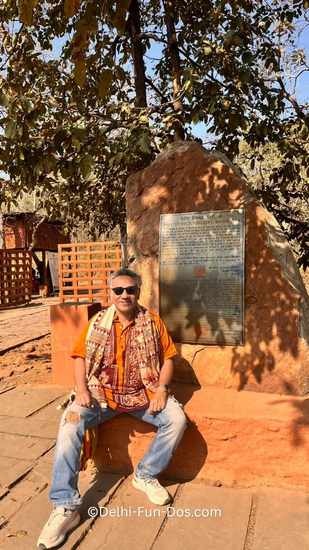
We were told that we will need about an hour at the most to visit the caves. But, we spent about half a day and could have stayed even longer. So even if you are not a history or an art buff, the rocks, the forest and the eerie paintings create an aura that is difficult to resist. Bhimbetka is a piece of India, or the world, that takes us to our roots way deeper that our imagination.
I would LOVE to see those rock shelters in person. That is the kind of thing I always look for when I travel. I love to see the history.
This is prehistory
This was such an interesting read. I hadn’t heard much about Bhimbetka before, but now I’m so intrigued by its history and significance. Definitely adding this to my travel list.
Oh I have heard so much about bhimbetka, but never got a chance to visit here! It's def on my bucket list after reading your post!
What a fascinating place to visit especially given its historical relevance and archeology. I was touched by your comment about the palm impression of a person who lived during that prehistoric age. Remarkable!
True