
When we planned our trip to the Rann of Kutch, we were looking for a journey that felt a bit more meaningful than the typical holiday. We had heard so much about the vibrant colours of the main festivals, but we were drawn to the silence and the stories of the north.
Contents
Road to Heaven, Kutch, Gujarat
That is how we found ourselves heading towards Dholavira, Kutch, Gujarat, after a busy Rann Utsav at the Tent City in Dhordo, another section of Kutch. The drive was the first sign that we were in for something special. As we approached Dholavira, we hit the stretch of road popularly known as the Road to Heaven. It truly lives up to its name. For miles, we were surrounded by vast, shimmering expanses of white salt and blue water. Pink flamingos dotted the water, and it seemed like a frame from some fairy tale. We stopped several times just to absorb the surroundings and reiterate that this was not an illusion but another magic of nature.
Settling into the Tent City
We chose to stay at the Tent City because we wanted an experience that felt authentic to the region without being too rugged. The façade was inspired by popular motifs and symbols of the Indus Valley Civilization. We could see the familiar dancing girl, bearded man, the Maha Yogi, and the bull seal motifs used all across the Tent City.

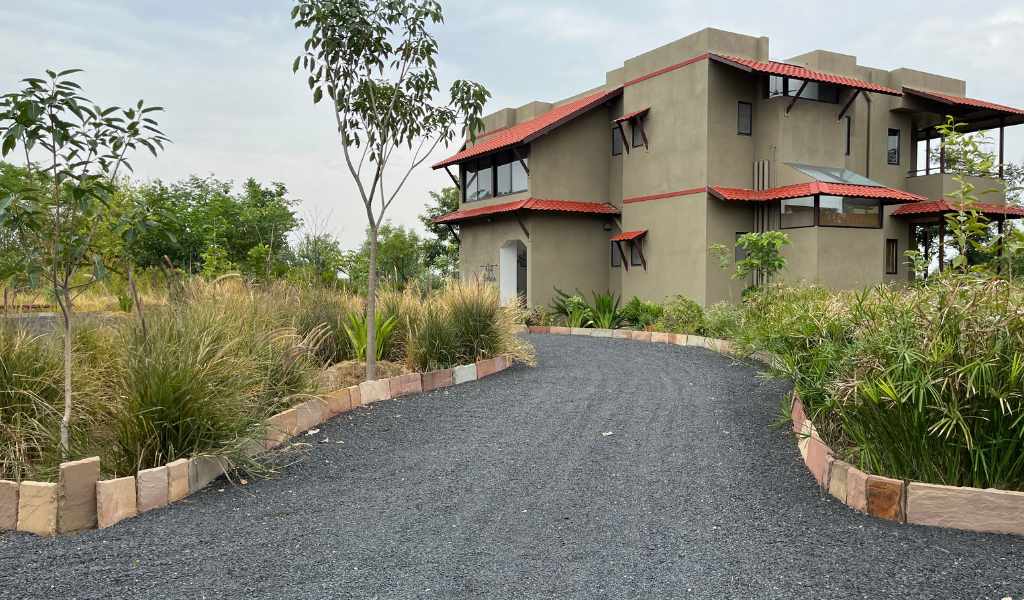
From the moment we arrived, we felt a sense of calm. The tents are arranged in a way that respects the vastness of the desert, and we were pleasantly surprised by how well they blended modern comforts like air-conditioning machines and hot water arrangements with regional aesthetics. There was a recreation room too, with some books and games like table tennis, ludo and our favourite, carrom. Battery-operated vehicles ferried us from one point to another in the sprawling Tent City.

Our favourite part of the stay was the hospitality. The attendants were friendly, warm and hospitable. The Dholavira ruins, as well as the serenity of the Tent City, have a calming effect. We found ourselves talking more, reflecting on the history of the land, and enjoying the slow pace of life.
Food at Dholavira Tent City
The food was another highlight for us. The huge dining area was in sync with the sense of community that may have prevailed in the Harappan era. Our breakfast, tea and lunch were all served here. The staff here were very forthcoming. On our request for mild food, they especially prepared curd rice and pasta within no time.

We were also treated to local flavours. We particularly enjoyed the bajra rotla and the fresh khichdi. It was simple, warming food that suited the desert air perfectly. We appreciated that the camp did not try to be a loud luxury resort, but instead offered a peaceful retreat that let the landscape do the talking.
Entertainment programmes at the Dholavira Tent City
There was an amphitheatre that holds live programmes every evening. We were captivated by the mature singing of the Manganiyar group, who performed delightfully familiar numbers. There was a Kathputli group who put up a quaint show. To balance the traditional offerings, there was a stand-up comedian who also amused the audience.
Shopping at Dholavira Tent City

We could not spot any shops in the open, but the Tent City stores compensated. Designed like a market square, various shops sold different kinds of Kutch crafts like block print appliqué work in bags and bedspreads, Kutch woven shawls and jackets, and brass bells from Nirona. A potter had set up his wheel there, so while you could admire his pottery and terracotta artefacts, you could also try your hand at raw local pottery.
Stargazing from Dholavira
An enthralling part of our stay was the midnight celestial safari. We were whisked away 10 km into the ink-black void of the desert, far from the Tent City’s glow. Under a canopy of a billion diamonds, experts guided us through the cosmos, weaving together myths with the reality of modern science. Identifying Saturn’s rings and distant constellations felt like unlocking an ancient map. Standing in that profound silence, connecting the dots between ancestral folklore and galactic physics, gave us total goose bumps-a humbling reminder of our tiny, beautiful place in the universe. Astronomy enthusiast or not, this is a must-do here.
Walking Through the Harappan Ruins
Now we come to the most awaited part of our trip. The main agenda for our journey was to see the archaeological site of Dholavira, a UNESCO World Heritage Site. The Tent City organises this tour for their guests. We headed out early in the afternoon in their bus, and about 20 minutes later, we were standing at the gate of the Harappan site.

We spent about two hours wandering through the different levels of the city. As we looked at the remains of the houses and the marketplace, we kept imagining the people who lived there. They were so advanced for their time. We were both fascinated by the sophisticated water-harvesting system. Seeing the massive stone-cut reservoirs and the intricate channels they used to manage water in a desert environment was incredible. It makes you think about how we manage our resources today.
Our guide pointed out the famous signboard, which is considered one of the oldest in the world. Even though the letters are now just impressions in the earth, the thought of an ancient civilisation communicating in such an organised way was a lot for us to process. We stood at the highest point of the citadel and looked out over the entire site, feeling a deep connection to the history of the subcontinent.

There is also a museum here that houses relics found at the excavation sites, as well as provides a short summary to visitors about the history of this ancient civilisation. Notwithstanding whether you are a history buff, walking through the gates of an ancient Harappan city that dates back thousands of years is a humbling experience for any traveller.
The Fossil Park at Dholavira
After exploring the ruins, we took a short drive to the Wood Fossil Park. It is a quiet, unassuming place, but once you realise that the logs you are looking at are millions of years old, it changes your perspective. We walked along the paths, looking at the fossilised remains of trees that existed long before the city of Dholavira was even a thought.
How to Reach Dholavira
Reaching Dholavira is an adventure that takes you through some of the most beautiful landscapes in Gujarat. The nearest major city is Bhuj, which is about 210 km away. If you are flying, you can land at Bhuj Airport and hire a taxi for a scenic four- to five-hour drive. For those travelling by train, Bhuj is also the most convenient railway station.
Time to Visit Dholavira
The best time to plan your trip is during the winter months, from October to March. During this time, the weather is pleasant and cool, making it perfect for walking around the ruins and exploring the desert without the harsh sun. This period also coincides with the Rann Utsav, when the region comes alive with music, crafts and cultural festivals.

While the monsoon (July to September) turns the parched land into a rare, lush green landscape, the summer months from April to June can be extremely hot and are generally avoided by travellers. Visiting in winter also gives you the best chance to see migratory birds like flamingos at the nearby sanctuary.
Our journey to Dholavira was more than just a holiday; it was a way to connect with the deep roots of our history. From the quiet evenings under the stars to the walks through ancient streets, every moment felt special. Most importantly, it was the first Harappan site that we visited, a major achievement in our travel saga.
Thank you for a wonderful blog post! During my early days in career, I was working with Gujarat Govt and was working in Gandhinagar! I wanted to visited Dholavira- an early harappan site and also witness the glory of Rann Utsav but sadly I couldn't. I had learnt and saw it through this post the wonderful tent city at Dholavira!
Thank you for adding a city to my travel bucket list!
It looks like you had a blast at Dholavira. I also love visiting places that are not only beautiful, but also have something deeper to offer, whether it is history, spirituality or strong cultural roots. THanks for sharing your adventures!
That is so amazing. I love history, and this is the kind of place I could spend hours soaking up. Very cool!
Those ancient motifs on the tents add a nice layer of history to the stay. It is refreshing to find a spot that respects the desert while keeping things comfortable for guests. Taking that drive past the flamingos must have felt pretty surreal in person. ♥
I have always found ancient relics, and fossils super interesting. I have never been in a tent city. Must have been an amazing experience
I've been to India a few times but never been to Gujarat. Heard a lot of good things about this state but your blog post convinced me to pay it a visit next time.