
We had studied Calicut, Kerala, in our school history. Kolkata was still Calcutta those days, and we were intrigued that Calcutta had an almost namesake, Calicut, in India. Moreover, Vasco da Gama, the Portuguese adventurer, had landed in Calicut in the 15th century, and his place in history is also sealed as an explorer. Given such rich historical reasons, Calicut was embedded in our brain, and we got an opportunity to live that history in real during our last trip to Kerala.
So even though we spent just one day and 2 nights in Calicut, we used every moment. In hindsight, some days begin in five-star comfort and end in banana chips and fruit halwa. This was one of those.
Contents
A Brief History of Calicut
Once known as the City of Spices, Calicut-now officially Kozhikode-was a key port on the Malabar Coast and a major player in the global spice trade. The legendary Zamorins ruled here, and traders from Arabia, China, and Europe docked at its harbours for centuries. It is said that in the year 1498, Vasco da Gama landed here at Kappad Beach, changing the course of Indian and global history by opening the sea route between Europe and the East.
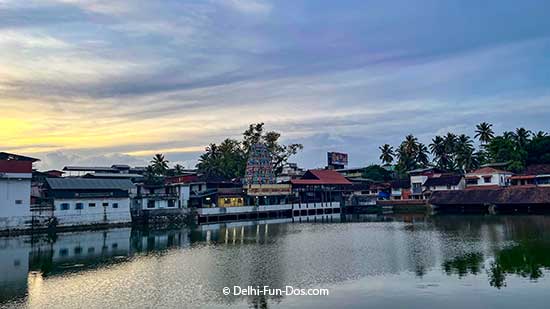
Apart from the smallish stone monument at the Vasco da Gama landing site in Calicut, there is not much of Vasco da Gama mementoes in the city. This we believe is because of the chequered sentiments Malabar people have about Da Gama and his imperialist activities. Nevertheless, the rich past lives in books, churches and even crafts.
Waking Up in Style: Breakfast at Tiara by MPS, Calicut
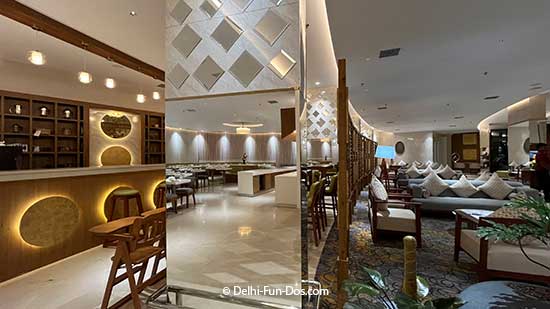
We started our day in Calicut at Tiara by MPS, a boutique hotel that surprised us with its elegance. Our room was modern and cosy, but it was the breakfast spread that stood out. A mix of Kerala and continental flavours greeted us-appams with stew, fresh fruit, dosa, omelettes and toast and more. Honestly, we could’ve spent the whole day just chilling here. But Calicut beckoned.
Must-do in Calicut
Beypore – Home of the Uru
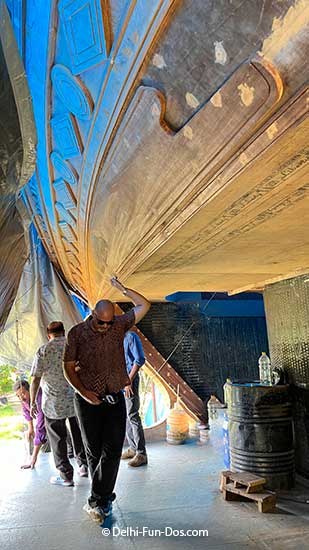
Our Calicut journey truly began in Beypore, about 10 km from the city, to see one of the richest crafts of Calicut that has survived ages. This small port town is famous for Uru-making, an ancient tradition of building large wooden dhows by hand. These ships, known as Urus, are still made for clients in the Middle East without any blueprints! The skills are passed down through generations, and watching the decks made with wood, ropes, and chisels was like stepping into a living museum.
Of Mosques, Churches, and Temples – Spiritual Snapshots
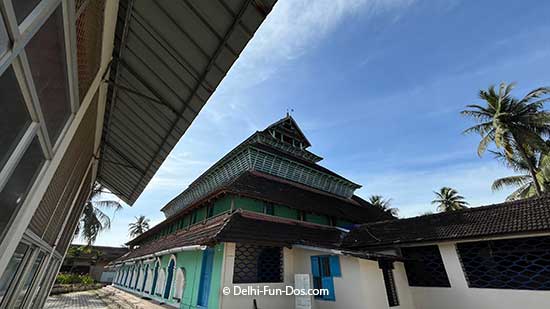
Back in the heart of Calicut, the city’s multi-faith history unfolded before us. First came the Mishkal Mosque, built in the 14th century. Made almost entirely of wood and spread over multiple floors, it felt more like a palace than a typical mosque. Nearby was the Jama Palli, another historic mosque that still resonates with a sense of calm.
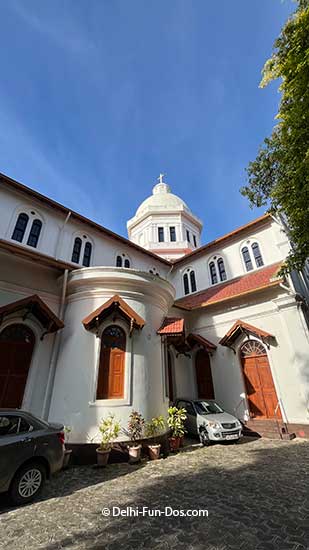
A short drive took us to the Mother of God Church (Matri Dei Church), the oldest Roman Catholic Church in Calicut, dating back to the year 1498, the year when Vasco da Gama arrived. Its whitewashed walls and stained-glass windows carried a gentle charm like that had been intact for over 500 years. We sat there quietly, soaking in the cool interiors and centuries-old ambience.
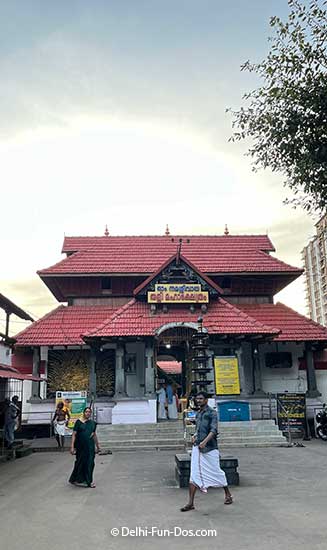
And then came the Tali Shiva Temple, a fine specimen of traditional Kerala temple architecture. With sloping roofs, intricate wood carvings, and a pond beside it, the temple felt deeply rooted. The sanctum sanctorum was lit with brass lamps, and the magical aura held us in a trance.
The most important point to ponder here is that three spiritual spaces, three religions, all within a few kilometres of each other. That was Calicut for us.
Halwa, Chips and More: The Sweet Side of Calicut
In addition to the cultural richness of Calicut, the other reason why we were excited to be here was that this city was the home to one of our favourite desserts – Calicut Halwa. We have consumed umpteen kilos of this dessert every year from the Trade Fair in Delhi. We were not leaving Calicut without seeing where this delectable dessert was made.
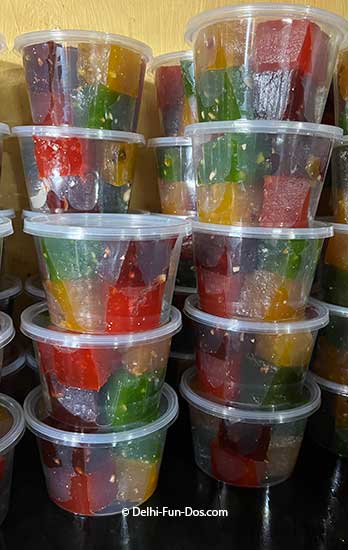
To that end made our way to SM Street, officially called Sweet Meat Street. Among the serpentine lanes in the labyrinth-like neighbourhood, we reached a factory that exclusively produced the halwa. We stepped into a halwa factory and came to know that the halwa was made the traditional way using coconut milk, jaggery, fruit flavours, nuts and raisins and coconut oil. Like most workshops of traditional Indian sweets, this place was also rather deglam. Yet watching the colourful slabs being cut, packed and sold by the kilo, almost made us want to pinch ourselves. Like Kalimpong Cheese and Kotpad, our travels had brought us back to the source of another one of our favourite items.
We did another round of the SM Street in the evening. This bustling shopping lane is lined with stores selling everything from spices and chips to shiny sarees. But our focus was clear-halwa and banana chips. Walking past all the clothes, accessories and electronics shops, occasionally, we would stop at a halwa shop, marvelling at the orange, black, and yellow blocks, each with its own flavour and texture. It was hard to stop at just one.
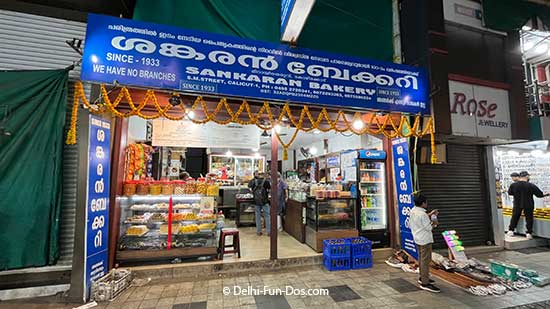
On popular recommendation, we headed to the iconic Sankaran Bakery, a local institution. Their halwas were very tasty. Given that fruit halwa from here has a long shelf life, we packed a few varieties as gifts to carry for family and friends. But their banana chips-both salted and sweet, jaggery-coated- were some of the best we’ve had in Kerala.
Calicut Street Art
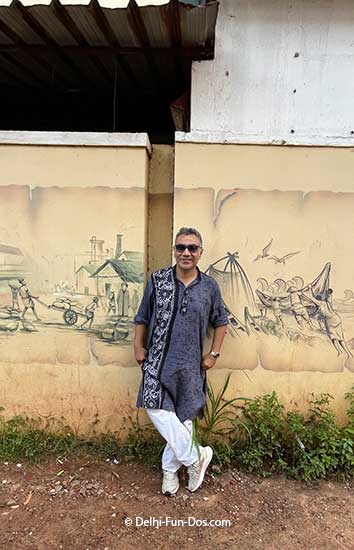
As we walked through parts of the city, we noticed pockets of street art—murals depicting local legends, boats, Kathakali dancers, and more. They weren’t everywhere, but where they appeared, they brought an unexpected pop of colour and creativity. Moreover, all the paintings were created meticulously and showed the high skills of the artists. Calicut was a quiet city, but it definitely breathed beauty into daily life.
What to shop in Calicut
If you’re in Calicut, don’t leave without tasting and packing its famous halwa-sticky, colourful, and delicious. We picked up a whole bag of halwa in every shade and flavour from SM Street, the city’s buzzing shopping lane. Banana chips are another must-buy sweet and salty-and they’re fried fresh in front of you at local bakeries.
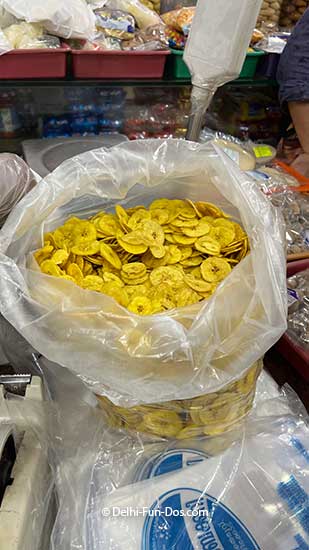
Apart from snacks, the area is also known for spices, coir products, and handloom textiles, and you would find many such items in the shops on SM Street. But for us, it was really about the food-Calicut’s edible souvenirs are what stayed with us long after we left.
How to Reach Calicut
By Air: Calicut is served by Calicut International Airport (CCJ), in Karipur, about 28 km from the city centre. It has regular domestic flights from major Indian cities like Delhi, Mumbai, Bengaluru, and Chennai, and some international flights as well.
By Train: Kozhikode Railway Station (CLT) is a major railhead on the Southern Railway network. It is well-connected to most Indian metros, including Thiruvananthapuram, Kochi, Chennai, Bangalore, Mumbai, and Delhi.
By Road: Calicut is connected via NH66 (formerly NH17) and NH766, which are well-maintained. There are regular KSRTC and private buses from nearby cities like Kannur, Wayanad, Mysuru, and Kochi. We came by road, and in the process, we were lucky to witness the scenic coastal roads of Kerala.
Where to Stay in Calicut
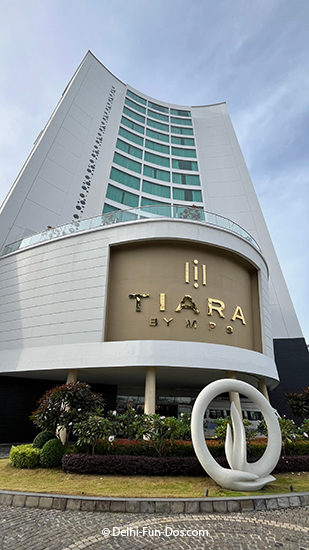
Calicut offers a range of stay options for every kind of traveller. From luxury hotels with modern comforts to budget-friendly lodges near the railway station, there’s something for everyone. Boutique hotels and business-class accommodations are available near shopping areas and major landmarks. Homestays are a great option in case you want a local experience. If you’re looking for a quiet break, some properties near the beach offer peaceful stays with easy access to local attractions.
Places to Visit near Calicut
If you have more time, Calicut is a great base to explore nearby places in North Kerala and beyond. Many beautiful spots are just a short drive or train ride away-perfect for a day trip or a weekend break.
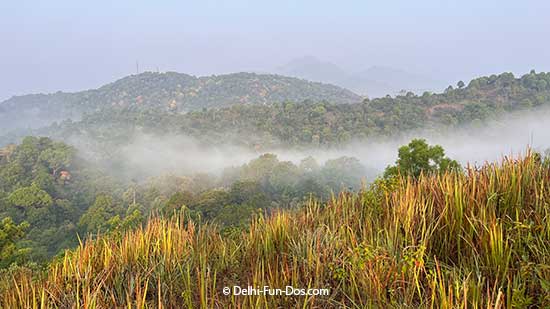
Wayanad – Wayanad, about 85 km from Calicut, is a green and hilly district full of waterfalls, spice gardens, and wildlife. You can visit the Honey Museum, go boating at Pookode Lake, or relax by Banasura Sagar Dam. It’s ideal for nature lovers and those looking for some peace and fresh air.
Kannur – Kannur lies around 90 km north of Calicut. This coastal town is known for its quiet beaches, colourful Theyyam performances, and handloom weaving. You can walk through the old St. Angelo Fort or take a ride of the enchanting museums reflecting the rich heritage of the city.
Thalassery – Thalassery, just 70 km away, is full of history, food, and culture. Once an important colonial port, it still has an old-world charm with its fort, beautiful sea views, and heritage buildings. Don’t miss the local biryani and a visit to the Odathil Palli mosque. Bottom of Form
Wish we had more time in Calicut
Late in the evening, we were back at our hotel, bags heavy with halwa and hearts even heavier with joy. It’s hard to describe what made Calicut so special. It could be the humble honesty of the rickshaw driver, the quiet elegance of a wooden mosque, the sweet scent of halwa and banana chips in the air, or just the sense that this city has nothing to prove.
So if you’ve got just one day in Calicut-make it count like we did. Forget the checklist. Follow the scent of fresh halwa. Sit inside an old church. Watch a ship being built. And feel the pages of your schoolbook come alive, right in front of your eyes.
0 Comments